What these seasonal rankings mean
A destination can be excellent in one month and awkward in another without changing its character. Daylight, public holidays, heat, school breaks and transport frequency all shape the holiday you actually receive. Our rankings are an editorial starting point for travelers who prefer walking, ordinary local meals and a few carefully chosen sights. They are not weather forecasts, numerical quality scores or claims that one city is objectively best.
Within each season, the first choice is our strongest general fit for that style of trip; the second offers a different emphasis. Northern Hemisphere seasons are used throughout. Coastal swimming, mountain hiking and winter sports need more specific conditions than a city break. Before paying, check your exact dates against local event calendars, official transport timetables and current travel advice.
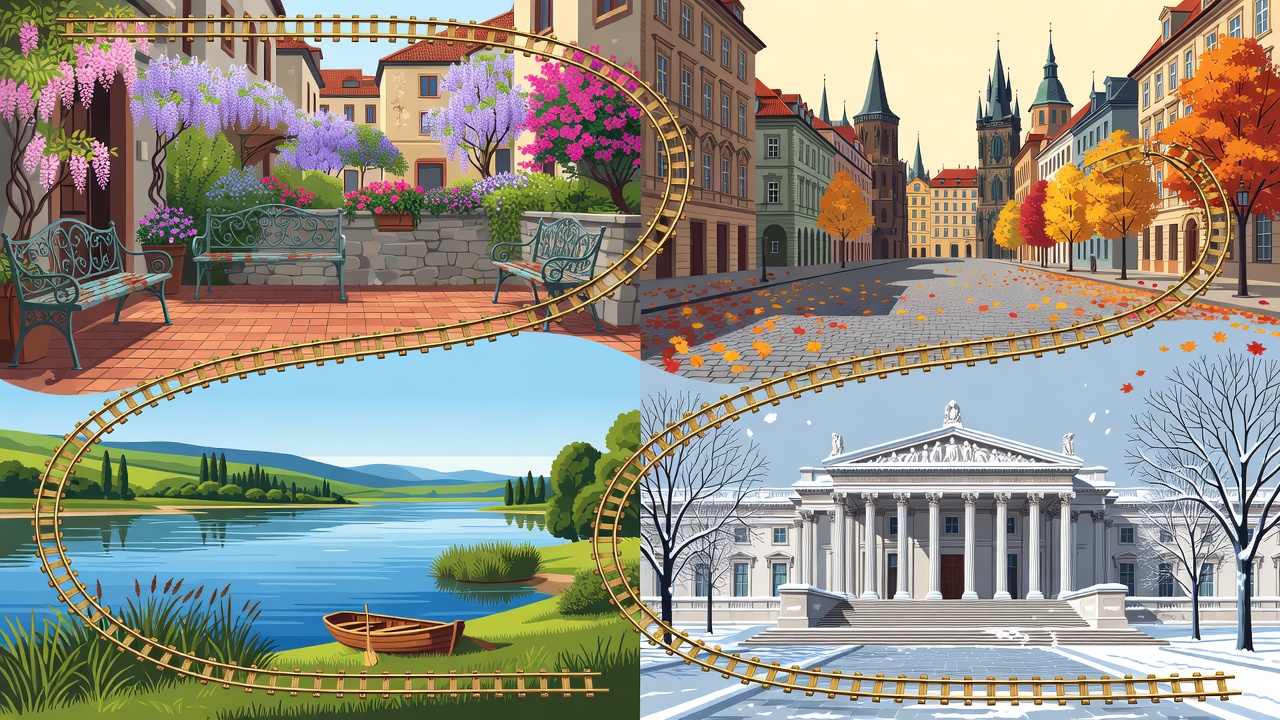
Spring: Seville first, Porto second
1. Seville: March and April can make a convincing case for streets, courtyards and slower lunches before the stronger heat of later months. The Alcázar and the cathedral deserve deliberate scheduling rather than being squeezed between long outdoor walks. Semana Santa and the Feria de Abril can transform the atmosphere and accommodation demand; their dates must be checked for your travel year. Choose this option if cultural energy matters more than a quiet, low-cost escape.
2. Porto: April and May suit a city-and-river itinerary if you are happy to carry a rain layer and change plans. The Douro riverfront is only part of the appeal: allow time for uphill neighborhoods and ordinary cafés away from the most photographed lanes. Porto ranks behind Seville here because spring weather can be less settled for a walking-led break. It may rank ahead for you if a smaller-feeling center and Atlantic atmosphere matter more than warmth.
Summer: Ljubljana first, Copenhagen second
1. Ljubljana: A compact center and riverside evenings can make a short summer stay feel manageable. The city works especially well when you resist treating Lake Bled, Postojna Cave and every nearby landscape as compulsory day trips. Excursions require separate budgets, travel time and checks for weather or service changes. Summer can still bring heat, rain and busy visitor periods; smaller scale does not mean empty streets.
2. Copenhagen: Long daylight and a useful public transport network support flexible days, with indoor options when conditions change. It is the better choice if you value design, museums and an urban waterfront more than low daily spending. Accommodation and dining can stretch a modest budget, so obtain real room quotes before being persuaded by an attractive flight. Copenhagen’s place in this shortlist reflects the experience, not a claim of summer affordability.
Autumn: Valencia first, Bologna second
1. Valencia: September and October can balance old-town exploring, the Turia Gardens and a separate coastal day. Do not read “autumn” as a promise of mild, dry weather: warm spells and heavy rain are possible. Swimming conditions and beach services vary. Make the city your core plan and the coast an option, rather than building the whole trip around a beach assumption.
2. Bologna: Porticoes, food traditions and a compact historic center make this a useful city break when beach weather is not the objective. University life and trade events can influence room availability. It suits travelers content to spend time in one place; it is less compelling if your main aim is dramatic natural scenery. A rail day trip should replace part of the plan, not simply be added to it.
Winter: Vienna first, Málaga second
1. Vienna: Choose an indoor-rich itinerary of museums, cafés and a performance if the schedule and budget fit. Short daylight and cold weather make a long outdoor checklist less comfortable. Seasonal markets are date-specific, not an all-winter feature, and holiday periods can bring high demand. Check museum opening days and book the experiences you care about directly with their operators.
2. Málaga: This is an alternative for travelers seeking a milder-feeling city break rather than guaranteed beach conditions. The historic center, museums and waterfront can anchor a short stay. Rain, cool evenings and seasonal closures remain possible. If warm-water swimming is essential, neither this description nor a climate average is enough evidence to book.
Turn a shortlist into a decision
Write down one non-negotiable: comfortable walking, lower room costs, long daylight or a particular event. Remove any destination that cannot reliably support it in your month. Next compare door-to-door travel time and the whole-trip budget. Finally, keep an indoor alternative and one unscheduled half-day. A resilient plan usually produces a better holiday than trying to make a favorite photograph dictate the season.
Check at source: consult Seville tourism, Visit Ljubljana and Visit Valencia for event calendars and practical updates. Official information can change after you first read it.